WeaveGrid: Email Productization & Lifecycle Content Systems
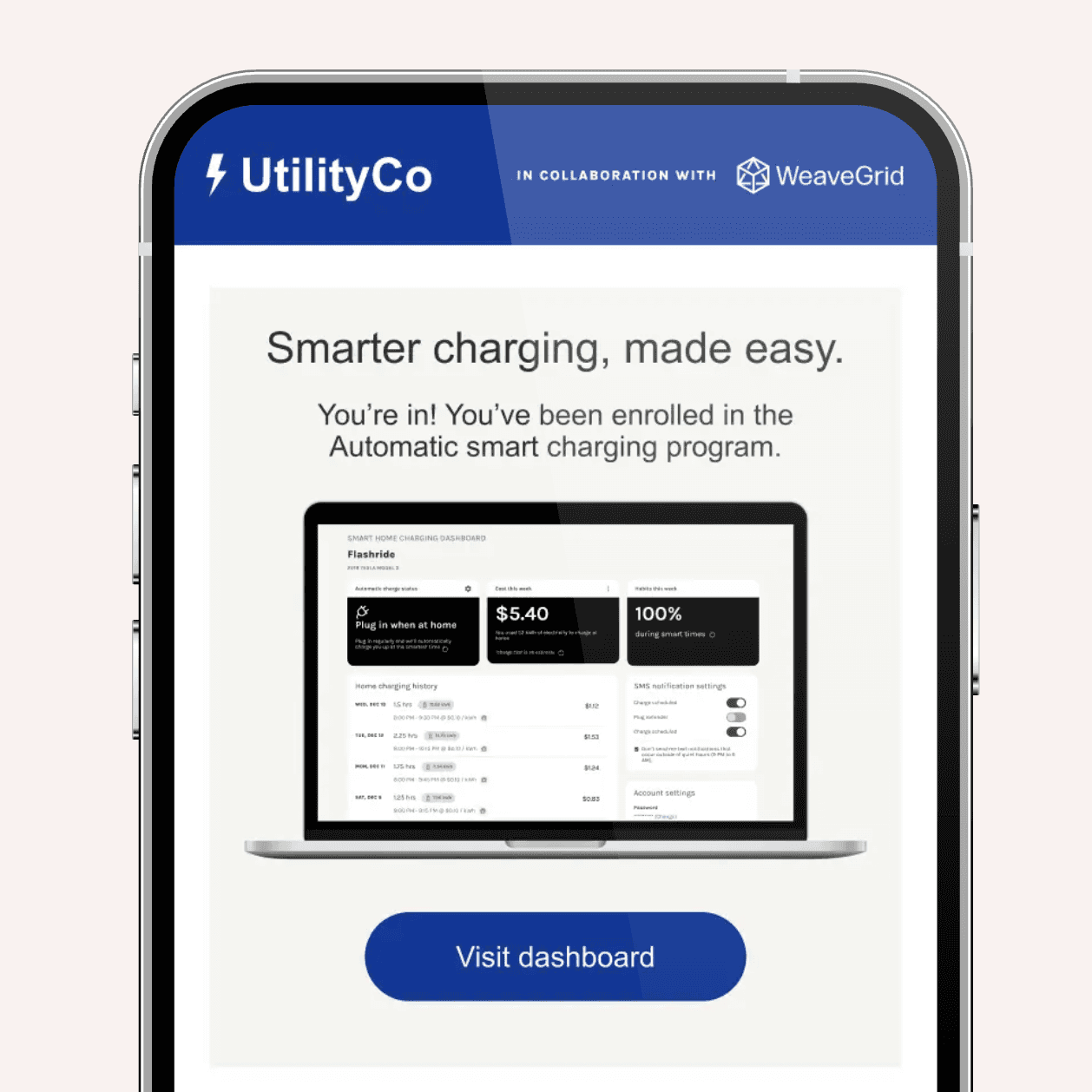
At WeaveGrid, I led an email productization initiative designed to support rapidly growing utility EV charging programs across multiple partners.
As new utility programs launched, the existing communication system became increasingly difficult to scale. Hundreds of co-branded emails, onboarding flows, and customer communications required ongoing customization, review, and manual production work across partner programs.
I partnered closely with product and engineering teams to redesign the communication infrastructure into a scalable, reusable content system built around dynamic templates, shared lifecycle flows, and backend-controlled content architecture.
The resulting framework consolidated hundreds of custom assets into reusable systems that significantly reduced production overhead, accelerated partner launches, improved maintainability, and enabled lifecycle campaigns to scale more efficiently across utility programs.
Core Focus Areas
Lifecycle Email Productization
Designed scalable lifecycle email infrastructure consolidating hundreds of co-branded utility program assets into reusable templates, shared lifecycle systems, and dynamic content frameworks.
Dynamic Content Systems
Built reusable lifecycle templates powered by backend-controlled dynamic content, enabling utility-specific branding, messaging, and program customization without requiring fully unique email builds.
Lifecycle Flow Architecture
Redesigned fragmented lifecycle workflows into scalable shared automation systems supporting onboarding, engagement, retention, troubleshooting, and reconnection journeys across multiple utility programs.
Operational Scalability & Process Optimization
Streamlined lifecycle production, review, and approval workflows to reduce manual content management, improve operational consistency, accelerate program launches, and support long-term scalability.
01 — Email Productization & Content Systems
Challenge
WeaveGrid launched co-branded EV charging programs with utility partners, requiring customer communication experiences to support unique utility branding, program requirements, and partner-specific customization needs.
As the company scaled rapidly, the existing lifecycle content system became increasingly difficult to manage.
Hundreds of custom emails and automated flows were maintained separately across utility partners, creating operational inefficiencies, inconsistent content management, and growing production overhead.
The fragmented system created several challenges:
content updates and universal changes were difficult to implement across programs
lifecycle messaging lacked a centralized source of truth
client review and approval workflows became increasingly cumbersome
maintaining individualized assets for each partner slowed launches and ongoing updates
manual content management limited the ability to focus on higher-impact strategic initiatives
The challenge was to develop a scalable lifecycle content infrastructure that could support rapid company growth while reducing operational complexity, improving maintainability, and preserving flexibility for utility partner customization.
Approach
I partnered closely with product and engineering teams to redesign WeaveGrid’s lifecycle communication infrastructure into a scalable, productized content system.
I developed a standardized library of 22 core lifecycle email templates built to support dynamic utility partner customization without requiring fully unique email builds for each client.
Templates used reusable baseline messaging while dynamically pulling in partner-specific branding, program details, and content variations from backend systems.
To support the new content architecture, I collaborated with engineering to create fully dynamic automated lifecycle flows that could support all utility partners through a shared infrastructure.
Instead of maintaining separate lifecycle flows for every client, the system consolidated hundreds of custom workflows into approximately 10 scalable dynamic flows.
I also helped develop standardized client review systems that streamlined approvals and allowed utility partners to request targeted customizations more efficiently.
The new system significantly reduced manual production work by shifting many ongoing content updates and customizations into backend-controlled dynamic content fields, eliminating the need to manually edit individual email templates for routine client changes.
My role included:
developing the overall lifecycle content system strategy
creating the standardized lifecycle messaging framework
writing the reusable core content across templates
building the dynamic email templates in Klaviyo
configuring lifecycle flows and automation logic
collaborating with engineering on event triggers, filtering, and dynamic content implementation
The resulting system became a core productized lifecycle framework supporting new utility partner launches at scale.
Impact
The new lifecycle infrastructure reduced program launch timelines by over 90%, eliminating major content production and review bottlenecks as WeaveGrid rapidly expanded utility partnerships.
By shifting partner-specific content management into dynamic backend-controlled systems, the new framework dramatically reduced ongoing manual production work and allowed lifecycle campaigns to scale without requiring fully custom email builds for every client launch.
The system also created a centralized, standardized source of truth for lifecycle communication across utility programs, improving operational consistency and simplifying future content updates across all partner experiences.
By automating large portions of the customization and review workflow, the project freed lifecycle marketing resources to focus on optimization, retention, partner launches, and performance analysis.
The infrastructure ultimately became part of WeaveGrid’s standardized partner onboarding offering, positioning the company to scale lifecycle marketing operations more efficiently as new utility programs launched.
Productized Emails
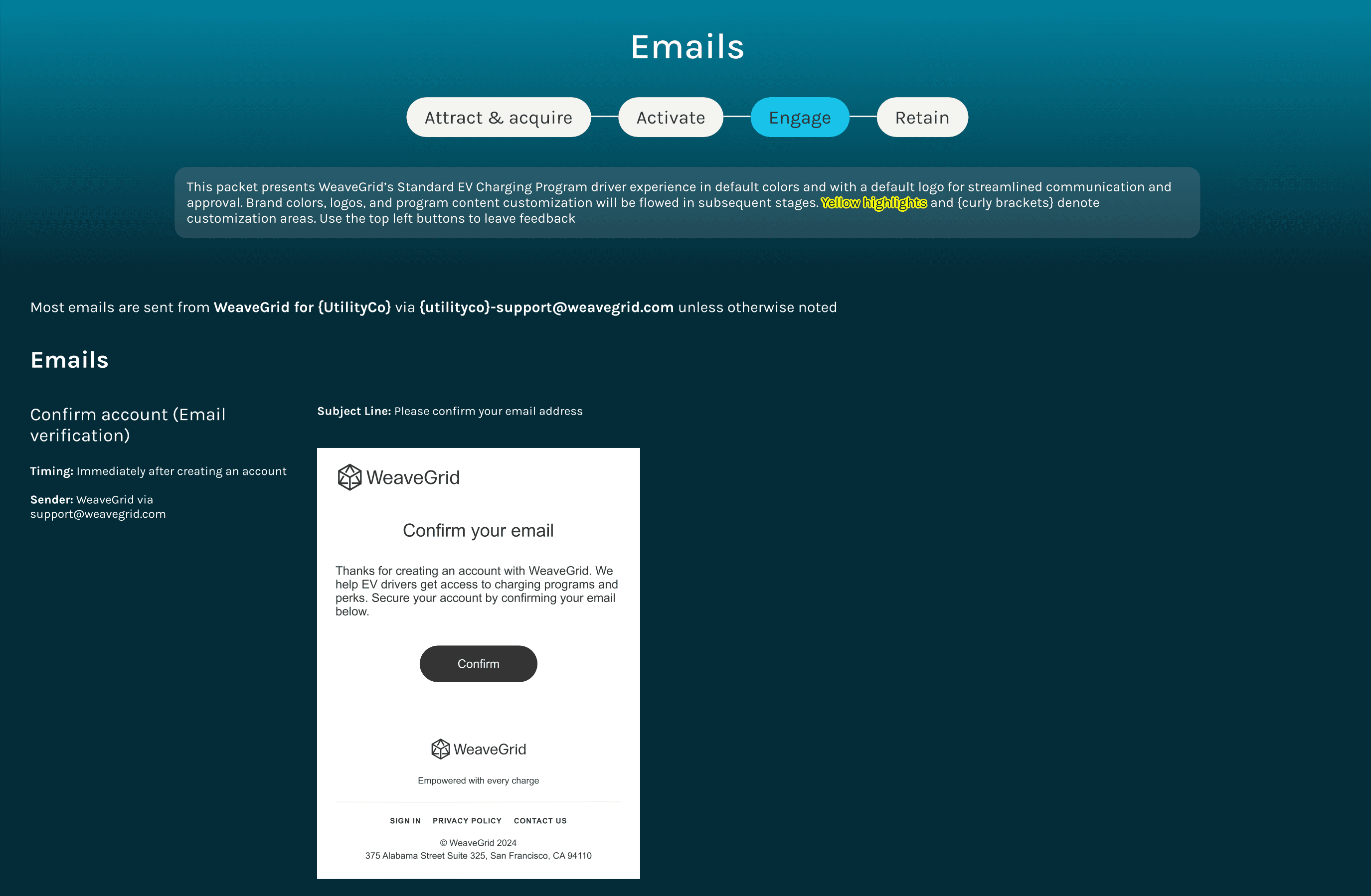
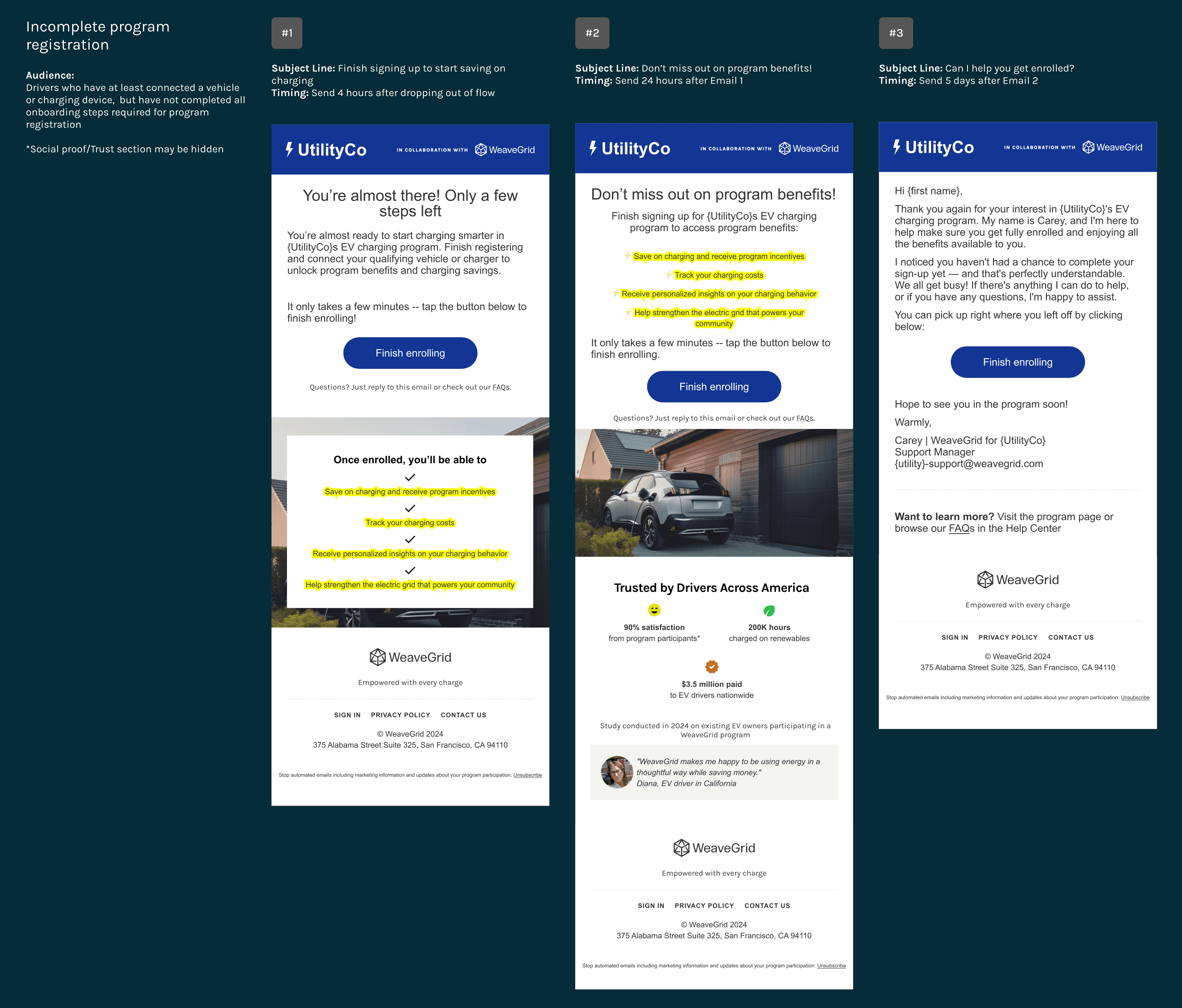
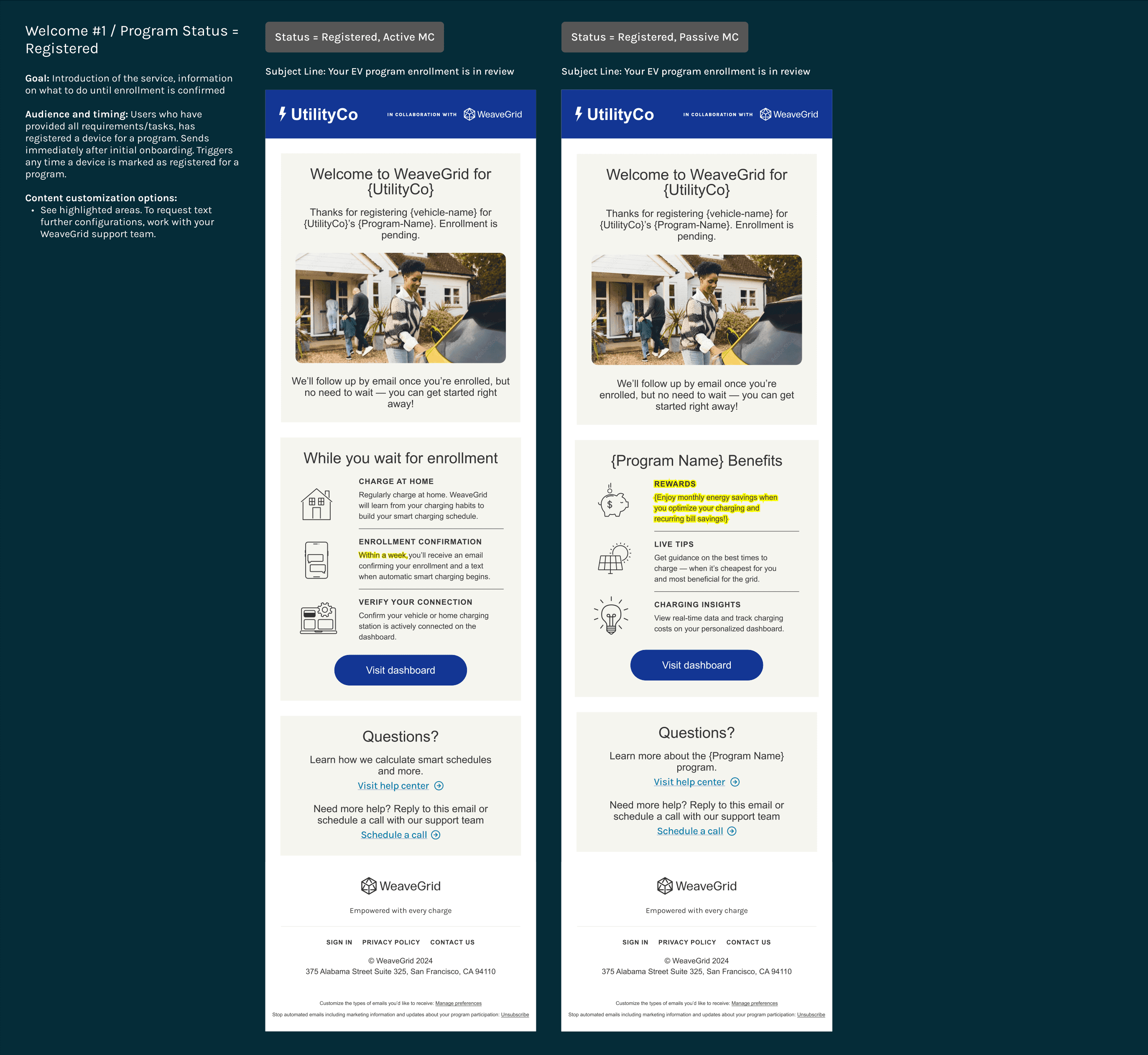
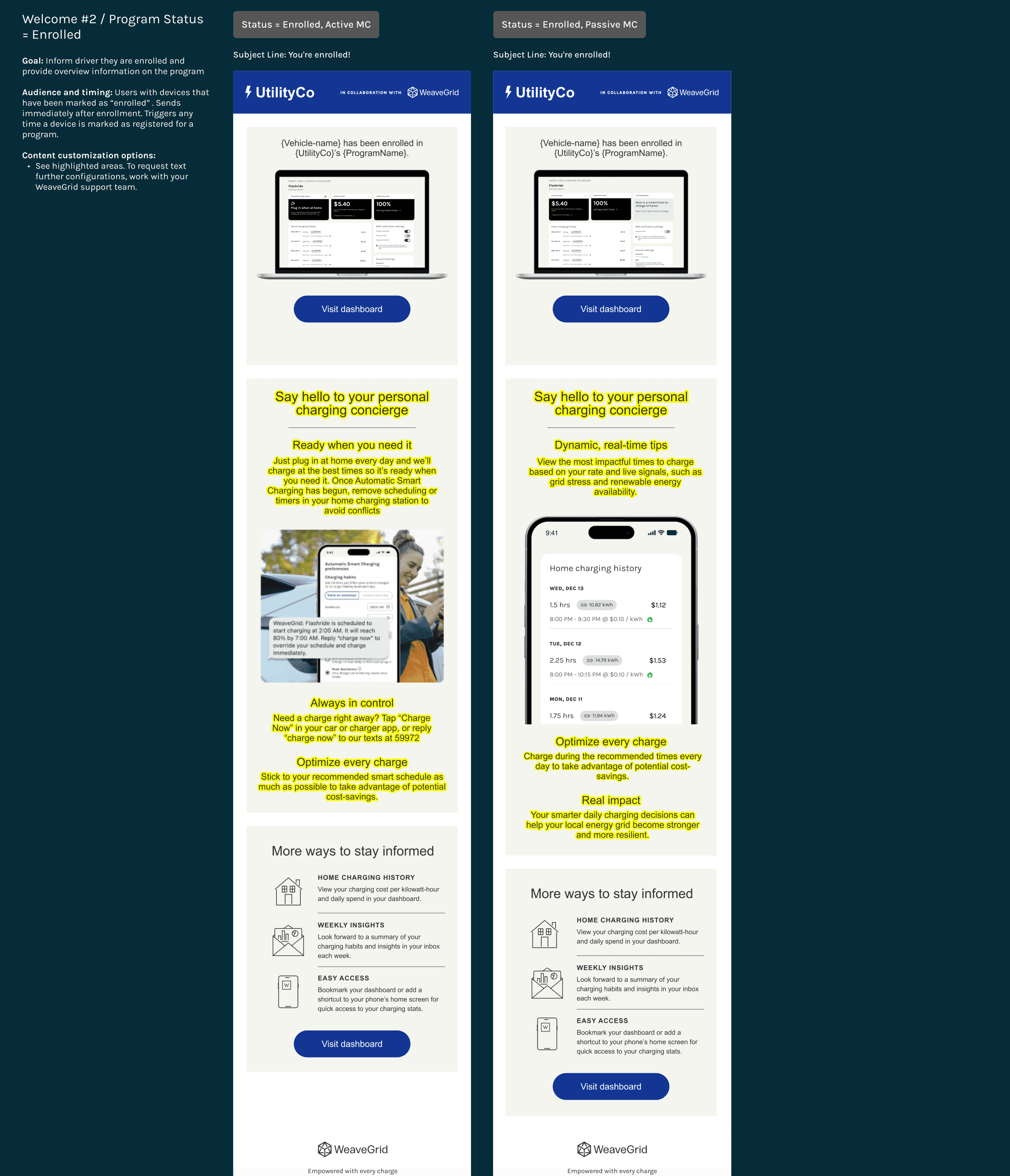
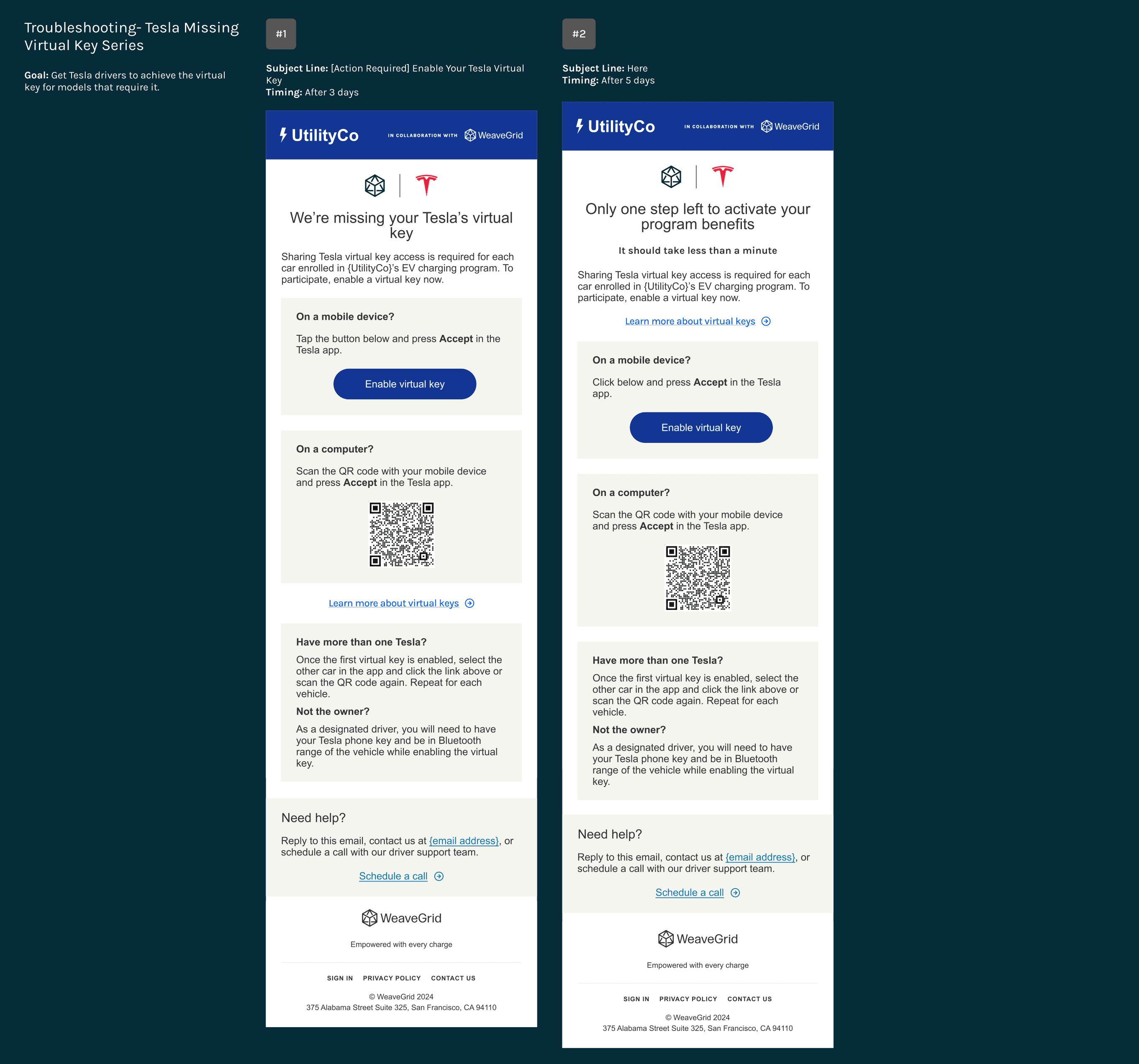
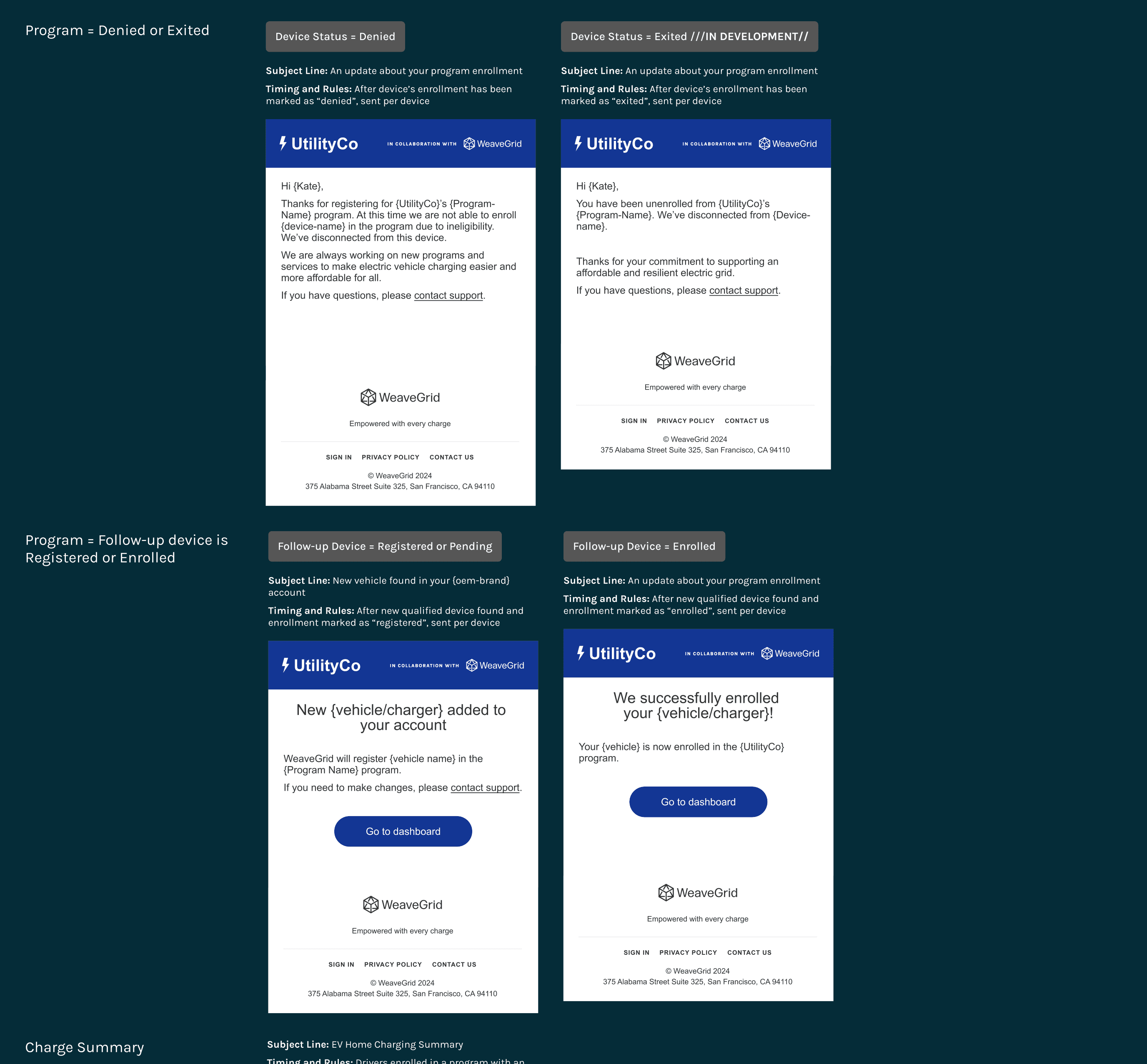
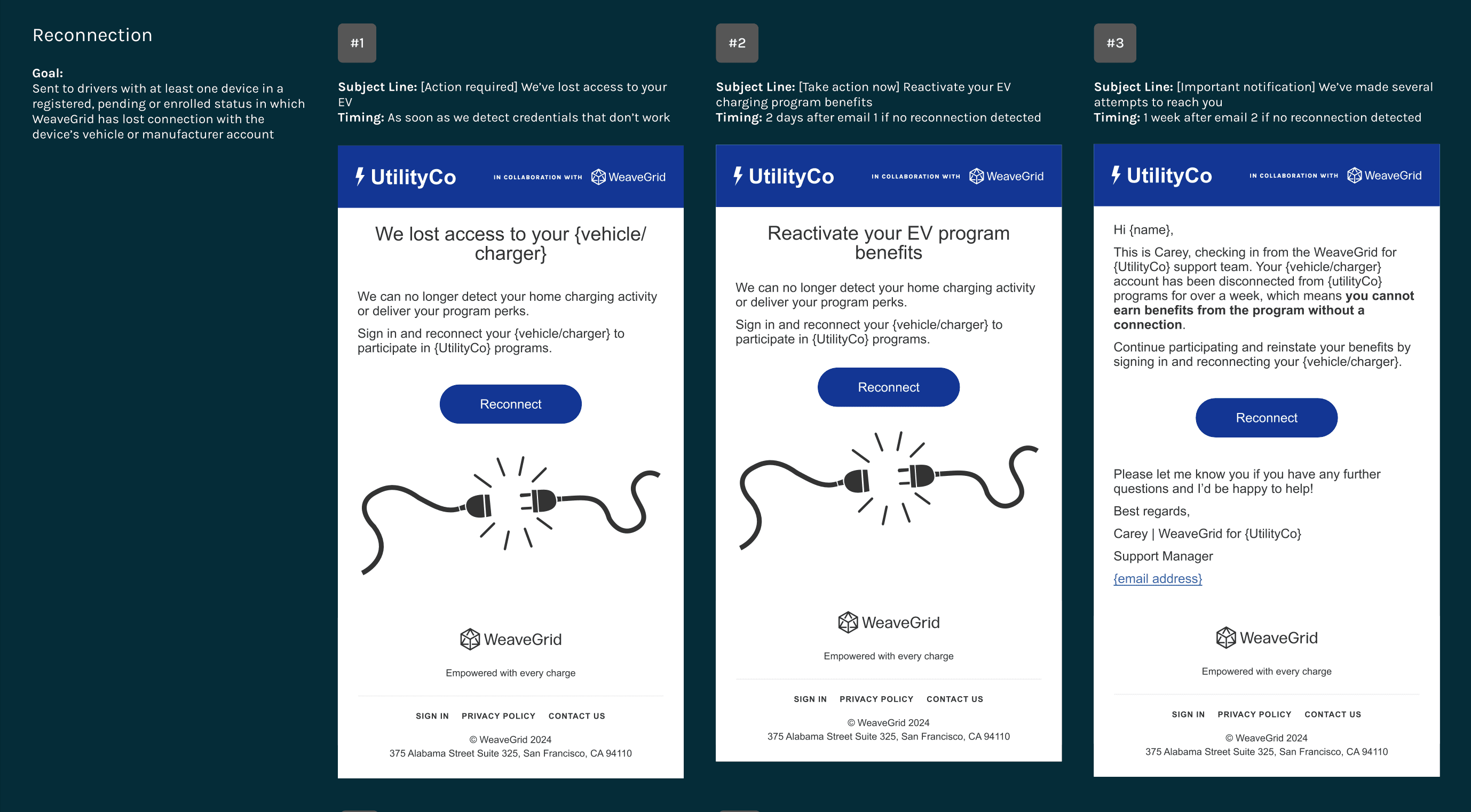
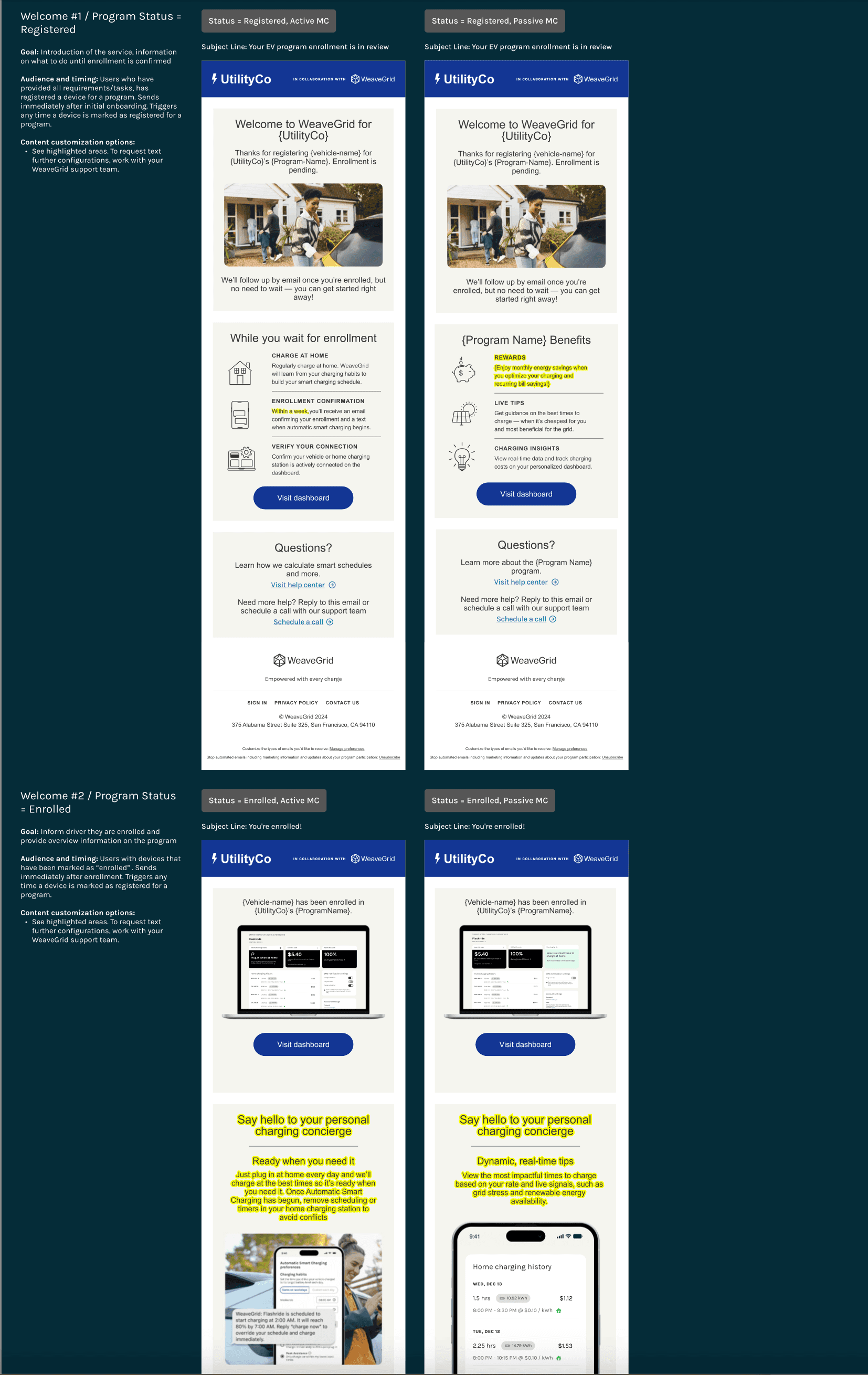
The packet below presents WeaveGrid’s standardized lifecycle communication system used across utility EV charging programs.
Utility partners reviewed these decks during onboarding and content review to request targeted customizations. Highlighted areas indicate configurable regions for partner-specific branding, messaging, and program requirements.